When Does Wooden Furniture Need a Carpenter Before Moving?
Much of the damage blamed on moving is not caused by the move itself but by wooden furniture that was tired before anyone touched it: a loose joint, a detached wardrobe back, a cracked bed base, veneer peeling at an edge. This guide explains the signs that a piece needs a carpenter before moving day, what the carpenter does in a short visit, and which pieces are better moved as they are or replaced.
Pre-move wooden furniture check · warning signs · what a carpenter fixes in an hour · what moves whole and what is left out
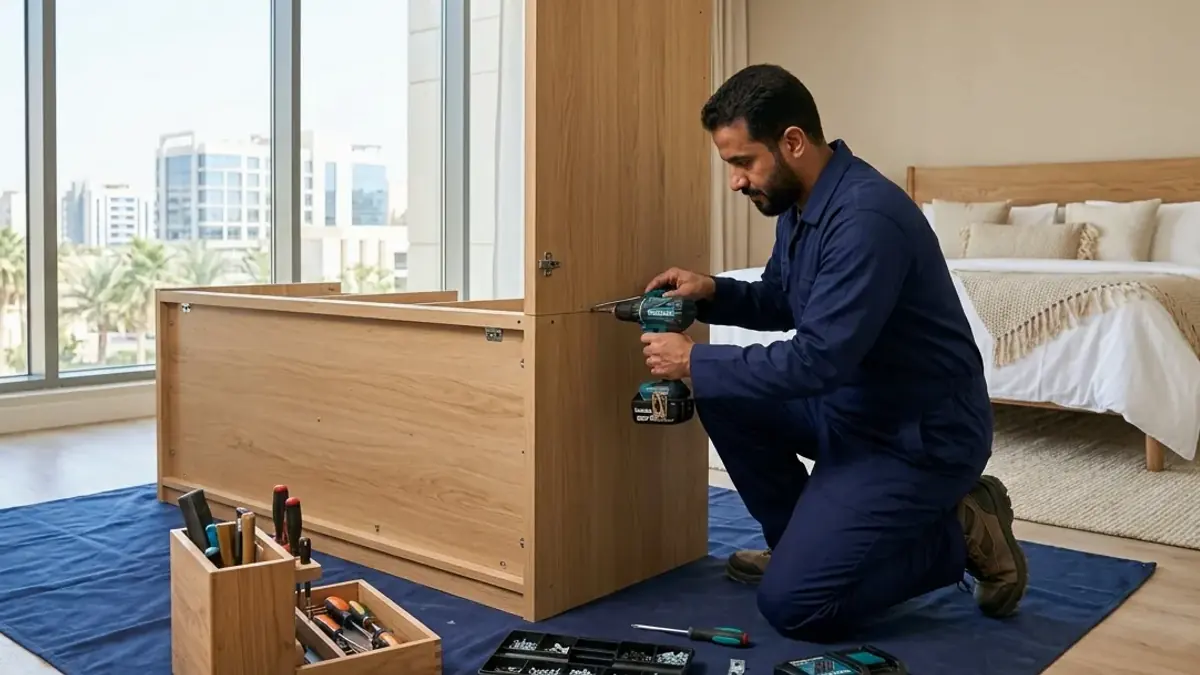
Why wooden furniture breaks in a move despite good wrapping
Wood carries static loads well but hates twisting. When a wardrobe is lifted, tilted and carried down stairs, its joints move at angles they were never designed for; any joint that was already loose opens, any small crack widens, and any thin back panel with loose nails slides. Wrapping protects the surface from scratches but cannot restore the strength of a weak joint.
So we recommend checking wooden pieces a week before the move, especially old, heavy or particleboard pieces, because fixing a joint with glue and screws beforehand takes minutes, while repairing a panel that snapped during carrying may be impossible.
Sign one: loose joints and wobble
Gently rock the wardrobe or table from the top. If the frame moves or you hear creaking, the joints are loose: screws have spun in their holes, glue has dried and crumbled, or wooden dowels have snapped. A piece in this state will come apart at the first tilt on the stairs.
The carpenter retightens the screws or replaces them with a larger size and a wooden filler, re-glues the joints with the right adhesive, or adds internal metal brackets that do not show. An hour's work turns the piece from risky to movable.
Sign two: detached wardrobe backs and drawer bottoms
Wardrobe and bookcase backs are usually thin panels fixed with small nails, and they are what gives the frame its resistance to twisting. A back detached at one corner means the wardrobe will lean like a parallelogram when carried and its joints will break. Look behind the wardrobe and at drawer bottoms: any loose or humidity-swollen panel is a sign.
The carpenter refixes the back with new nails or replaces it with a thicker panel if swollen. For IKEA-style wardrobes we secure the back before dismantling and take it apart with special care; see dismantling and packing IKEA furniture damage-free.
Sign three: cracks in bases and legs
Check table and bed legs and wardrobe bases where the leg meets the frame. A lengthwise crack in a leg, a leg that leans under pressure, or a bed base that groans under weight all mean the piece may collapse under lifting load. Large wooden beds most often reveal their cracks during dismantling.
The carpenter injects glue into the crack and clamps it, adds an internal brace, or replaces the leg. Most importantly he decides whether the piece should be dismantled or moved whole, because some cracks survive a whole-piece move but not dismantling.
Sign four: peeling veneer and swollen edges
Particleboard furniture with wood veneer fails at the edges: they swell with humidity and the veneer peels, and any load on that edge crumbles it. Wardrobes in bathrooms, kitchens and humid ground-floor rooms in Jeddah are most exposed.
The carpenter glues the peeling veneer, trims swollen edges and fits new edge banding, and judges whether the piece is worth it or whether replacing it is cheaper than moving it. See securing drawers and cabinet doors in transit.
Send photos of the wooden furniture that worries you on WhatsApp and we will tell you whether it needs a carpenter before the move.
Sign five: termites and woodworm
Small holes with fine sawdust under the piece or inside drawers, or wood that looks sound outside but can be pierced easily with a thumb, point to insect infestation. An infested piece may collapse during carrying, and worse, it carries the infestation into the new home and onto the rest of the furniture in the truck.
Here the decision is not the carpenter's alone: the piece needs specialist treatment before moving, or exclusion. We do not move infested pieces with the rest of the furniture without isolating them, and we alert you if we find it during the survey.
Sign six: doors and drawers that will not close
A wardrobe door that will not shut fully, or a drawer that rubs or drops when pulled, means the frame is out of square or the runners and hinges are damaged. In transit the doors swing open and the drawers fall out and break. The carpenter re-squares the frame, adjusts hinges and replaces runners, and that is done before the move, not after.
If there is no time for repair, we secure doors and drawers with residue-free tape and remove damaged hinges to carry them separately.
Pieces that usually need a carpenter
- Heavy old wooden bedroom sets assembled once years ago.
- Large wardrobes with three or more doors, especially sliding ones.
- Tall bookcases and glass cabinets with wooden frames.
- Large dining tables with detachable legs.
- Wooden kitchens moving with their owner.
- Inherited and antique furniture with old glue joints.
For antiques specifically see antique and luxury furniture moving, because their repair needs a specialist carpenter rather than an ordinary moving carpenter.
What the carpenter does in a pre-move visit
He goes through the wooden pieces, rocks them and checks joints, backs and bases, and sorts them into three groups: move as is, needs a quick fix now, or needs longer repair or exclusion. He performs the quick fixes in the same visit: tightening screws, glue and clamps, metal brackets, refixing a back.
He also decides how each piece will travel: full dismantling, partial dismantling or whole on a dolly, and writes it on the inventory list the moving crew uses on the day. See furniture inventory list before loading.
Dismantle or move whole? The carpenter decides
An old piece with glued joints may survive a whole-piece move but not dismantling, because forcing a glued joint apart breaks it. A modern piece assembled with cam locks survives dismantling but not whole carrying, because its panels twist. The carpenter tells the difference from the joint type and material.
Both cases are covered in moving furniture that cannot be dismantled and dismantling complex master bedrooms.
What is not worth repairing before a move
A particleboard wardrobe swollen on every edge, a bed with a base cracked in several places, a bookcase with a torn back and bowed shelves. Repair cost can approach the price of a new replacement, and moving them takes truck space and they may not survive. Honesty is part of the survey: we tell you if a piece is not worth it.
For excluded pieces there are donation or organised disposal options; see unwanted furniture disposal cost.
Old bedroom set or inherited furniture? Ask for a free survey with our carpenter before the date.
Jeddah's humidity and its effect on wooden furniture
Jeddah's coastal humidity makes particleboard swell and natural wood expand and contract as the air conditioning cycles, so joints move over time. Furniture on ground floors and in homes near the sea needs a closer check before moving.
After the move let pieces acclimatise for a day in the new home before final tightening. More on protecting furniture from heat and humidity.
A ten-minute self check
- Rock each piece from the top: wobble or creaking means joints need tightening.
- Look behind wardrobes and bookcases: detached or swollen backs.
- Press on legs and bases: leaning or groaning.
- Open and close every door and drawer: rubbing or not closing.
- Look for fine sawdust and small holes: insects.
- Run a finger along the edges: peeling or swelling.
Photograph what you find and send it with the house video, and our team decides whether a carpenter visit is needed before the date.
How we fit the carpenter into the moving service
A dismantling and assembly carpenter is part of our crew on every move with bedrooms, wardrobes and kitchens. When the photos reveal tired pieces we arrange a short visit before the date to secure them, or allow extra time on moving day to secure before dismantling. At the new home he rebuilds and adjusts doors and drawers.
Service details are on furniture dismantling and assembly in Jeddah and its standalone cost on dismantling and assembly only cost.
Common mistakes with tired wooden furniture
Wrapping a loose piece tightly as if stretch film could brace it, carrying a wardrobe with its back detached on both sides so it folds, forcing an old glued joint apart, reusing corroded old screws at reassembly, and moving an infested piece with the rest of the furniture.
All are avoided by a pre-move check and a clear decision per piece, which is what the survey does.
After the move: retightening and acclimatising
After the rooms are rebuilt in the new home we retighten screws a day or two later when possible, because wood shifts slightly with changes in humidity and temperature. We leave wardrobe doors open for a few hours to air, and make the final hinge adjustment once the piece has settled in place.
The arrival checklist is in furniture inspection checklist on arrival.
Why Al Ostoura for old wooden furniture
Because the carpenter is with us from the survey to the reassembly, because we are frank about what is worth moving and what is not, and because the dismantle-or-carry decision is made before the date, not on the stairs. Al Ostoura Moving serves every district of Jeddah and moves everything from modern to inherited furniture.
Send photos of your tired pieces today and we will tell you what they need before moving day.
How to request a pre-move furniture check
Send a video of the house with close-up photos of the pieces that worry you on WhatsApp, and mention the furniture's age and type. We reply with an initial assessment and a moving quote that includes a carpenter visit if needed, and schedule it so the securing happens well before moving day.
For valuable or inherited pieces we arrange a free on-site survey before promising anything.
Book your move with a carpenter who checks, secures and rebuilds, under a written quote.
Questions about checking wooden furniture before a move
Assessment from photos is free; a securing visit is a clear line on the quote if needed, and is often merged into moving day.
It can sometimes travel whole on a dolly, but it is better to tighten the joints first because stairs and tilting open them.
If the panels are swollen on every edge, the base is cracked in several places or there is insect damage, replacing it is usually cheaper.
Not with the rest of the furniture without treatment and isolation, and we alert you if we find it.
It needs careful dismantling more than repair; its backs are thin and its fittings do not tolerate many reassemblies.
At least a week before the date so there is time for a carpenter visit or a replacement decision.
Yes at reassembly, and we recommend a further tightening a day or two after the piece has settled.
Related pages
- Furniture dismantling and assembly in JeddahThe carpenter service
- Dismantling complex master bedroomsHeavy bedroom sets
- Moving non-dismantlable furnitureWhole-piece carrying
- Dismantling IKEA furniture damage-freeThin panels
- Securing drawers and cabinet doorsDuring transit
- Antique and luxury furniture movingOld glue joints
- Furniture inspection checklist on arrivalAfter the move
- Executive desk movingHeavy wooden pieces
Old or heavy wooden furniture? Send its photos now and we will tell you what it needs before the move and reply with a written quote.