Furniture Packing Service in Al Naeem, Jeddah: Protect Every Piece Before It Moves
Packing furniture is not the same as filling boxes. It means turning every large piece in your home into a protected load that survives lifting, the road and the unloading at the other end.
In Al Naeem, a north Jeddah district where family villas sit beside apartment buildings, the packing needs change from one home to the next: a wide majlis sofa set, a heavy wooden wardrobe, a marble dining table, or mirrors and glass display cabinets. This page explains how we wrap each type, what decides the materials and time, and how to get a written quote before packing day.
Packing matched to each piece, with disassembly, reassembly and a written contract. Quote by photos or video on WhatsApp.
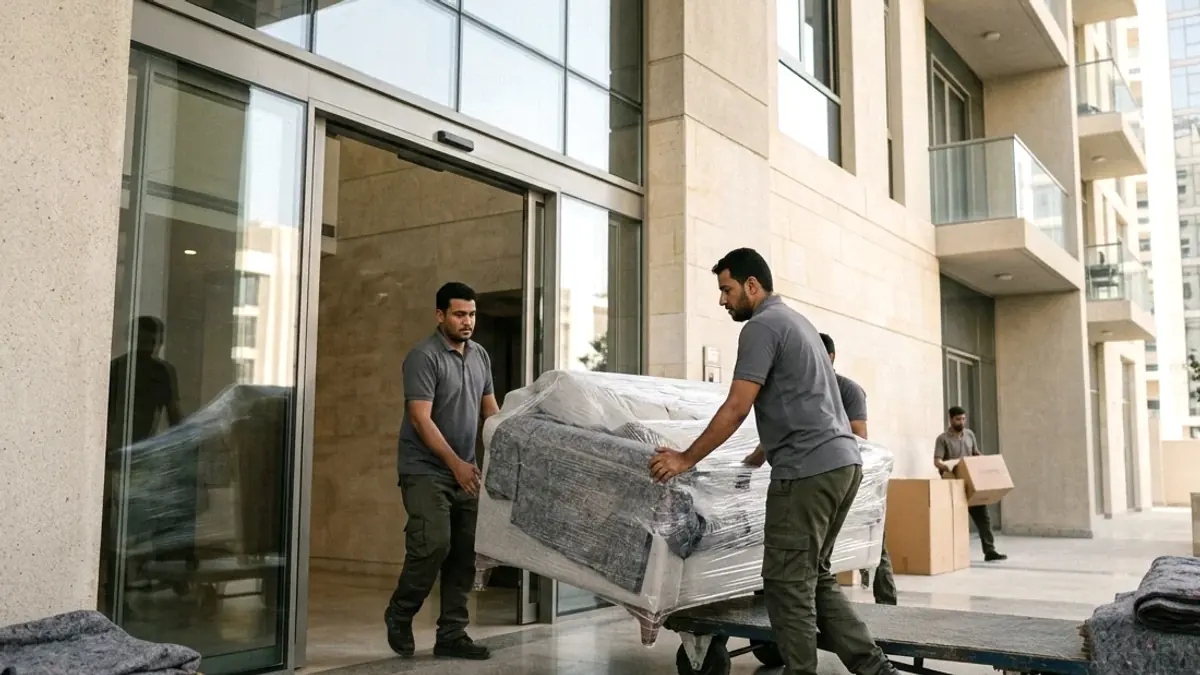
What furniture packing means and how it differs from boxing
Furniture packing protects the large pieces themselves: sofas, mattresses, wardrobes, beds, tables and mirrors. Boxing is about placing small belongings in cartons. The distinction matters because each calls for different materials and technique, and a single wardrobe can take longer to wrap than several boxes take to fill.
In Al Naeem homes we start with the big furniture because it is the most exposed to scratches and breakage when lifted, then move to the cartons. For the wider offer across the city, see our furniture packing service in Jeddah.
In practice we suggest splitting the work: we handle the large, fragile and dismantled furniture, and the family boxes clothes and personal items in cartons that we supply. That saves time and keeps every personal decision in your hands.
Why Al Naeem homes need planned packing
Al Naeem is mostly family housing, so one home often holds a full majlis, children bedrooms, a dining set and sometimes a fitted kitchen. That is a large number of medium and heavy pieces, and each one is moved at least twice: from its room to the truck and from the truck into the new home.
Most damage people complain about after a move happens in those two handovers, at doorways, corridors and stairs, not on the road. A good wrapping job is therefore an investment in the first hour of work, not in the drive.
Fully loaded wardrobes double the weight to lift, so we ask for them to be emptied before dismantling. Sofa and table legs deserve special protection, because dents in marble floors at the new home often start there.
Where Al Naeem sits and how it shapes the job
Al Naeem lies in north Jeddah near Madinah Road, Prince Sultan Road and Hira Street. Trucks reach it easily from the main roads, but interior streets are narrower and the truck sometimes parks far from the entrance. We factor that in by wrapping pieces to survive the carry between the door and the truck.
If you are moving to a nearby district such as Al Safa or Al Mohammadiyah, the drive is short, yet packing still matters because damage happens during loading and unloading rather than over kilometres.
Because apartment buildings in the area often have a shared lift with limited booking times, we also ask whether you have a lift slot or must use the stairs. That decides how large each wrapped piece can be and how many people carry it.
Materials we use and why each has a job
We work with a defined set: thin foam for polished wood, bubble wrap for corners and glass, stretch film to hold covers and drawers, corrugated cardboard for flat faces, heavy covers for sofas and mattresses, and corner guards for edges.
The material follows the piece, not the stock on the truck. Stretch film alone does not protect wood from impact, and bubble wrap alone can mark glossy surfaces if it touches them. So we layer by surface type. For a comparison, read bubble wrap vs corrugated cardboard.
One note: we avoid sticking tape directly on painted wood or upholstered surfaces and use a tape that holds the wrapping to itself, so the piece leaves the truck without sticky residue that is hard to remove.
Send photos of your rooms on WhatsApp 0566300558 and we will set the materials and crew size in a written quote.
Table: what we use for each furniture type
| Piece | Main protection | Note |
|---|---|---|
| Majlis sofas | Heavy cover, stretch film, leg guards | Cushions are removed and wrapped separately |
| Mattress | Sealed mattress bag | Carried flat or upright depending on type |
| Wooden wardrobe | Foam, stretch film, cardboard on faces | Doors and drawers secured before disassembly |
| Bed frame | Frame taken apart, panels wrapped | Screws bagged and numbered per bed |
| Marble dining table | Foam, rigid cardboard, protective frame | Carried on edge, never lifted by the middle |
| Mirrors and display cabinets | Bubble wrap, cardboard, fragile label | Moved upright, not flat |
If a piece in your home is not in this table, such as a piano, a safe or a large aquarium, tell us early. These need their own plan, and we price and schedule them separately in the written quote.
Sofas and majlis sets: biggest volume, easiest to ruin
A traditional majlis is one of the largest sets in a home. The pieces are long, take up a lot of truck space, and pick up dust and grease from hands if left uncovered, while exposed wooden frames get scratched.
We remove cushions and armrests, protect frame and legs first, then wrap the body in a thick cover held with stretch film without over-tightening, which can leave marks on fabric. More detail in majlis and living room moving.
Reclining sofas and corner units add another step: levers and mechanisms are locked or protected so they do not open in the truck, and loose sections are bundled together so nothing separates.
Bedrooms: wardrobes, beds and dressers
A bedroom wardrobe is the heaviest item in the room and the most likely to have a door swing open. We tape doors and drawers, wrap the faces in foam and cardboard, and for large units we dismantle into panels and number each one so reassembly is quick.
Bed frames are dismantled and the screws go into bags marked with the room name. The dresser travels with its mirror removed. Our bedroom moving and assembly service works hand in hand with packing so no screw goes missing.
Bed frames with storage drawers get their drawers emptied and secured, since a loaded drawer shifts during carrying and breaks its runner. Metal frames get their pointed ends wrapped so they do not scratch walls and doors in tight corridors.
Mattresses and pillows: dirt you cannot see
A mattress goes into a purpose-made bag that blocks dust and moisture, and is never folded or squeezed under heavy items. Foam types handle flat loading; spring mattresses should not be bent or they deform.
Pillows, cushions and bedding go into clean sealed bags and travel in the soft section of the truck, where they act as padding between hard pieces instead of using separate space.
Glass, mirrors and display cabinets
Glass cannot take stacking or side impact. We cover the surface with a layer of bubble wrap, add rigid cardboard on both sides, and tape a reinforcing X across large panes to limit cracking if it vibrates. Exposed faces are labelled fragile.
Cabinets full of tableware are emptied first and the tableware boxed separately; glass shelves are removed, wrapped and carried apart. See our guide to packing glass cabinets, mirrors and crystal.
Mirrors in particular deserve a second pair of hands. Wide mirrors flex under their own weight, so two people carry them upright with the longest edge vertical, and we never lean them against an unprotected wall.
Marble tables and stone surfaces
A stone top withstands vertical pressure but snaps under bending, so it is never lifted from the middle or laid flat on uneven items. We cover the edges with rigid corners and the face with foam and cardboard, and move it in a wooden or heavy cardboard frame that spreads the weight.
Legs are removed where possible and wrapped on their own. For very heavy tops we plan the carry with more than one person and a cleared route. Details are in our guide to protecting marble and granite dining tables.
Before the top leaves the room we photograph the surface from several angles. If a chip appears later, the photos show whether it was there already, which keeps the conversation with the crew factual and calm. Extension leaves and glass inserts are labelled and wrapped separately and travel with the base.
Ready to protect your furniture? Call 0566300558 or send your item list now.
Kitchen and large appliances
Fridges, washers and ovens need their outsides wrapped and their insides secured: fridge doors are taped, shelves and drawers removed or wrapped, and washing machine drums are locked according to the maker instructions where they exist.
A fitted kitchen needs a technician to take cabinets apart with care and mark every unit for reassembly. We wrap doors, drawers and glossy fronts in foam and number the units so they go back in the original order. Read about home appliance moving and kitchen moving and installation.
It also helps to photograph the back of any appliance before the cables are unplugged, so the technician can reconnect everything in the new kitchen without guessing.
Packing-day workflow diagram
A packing day in your home runs through five stages in order. The diagram below summarises them.
Small drawers in vanity units and TV cabinets are taped and, if they contain items, emptied. Remote controls, cables and handles are collected in one labelled bag per room so they can be found on day one.
Disassembly and reassembly are part of good packing
Sometimes the best protection is making the piece smaller: taking apart beds, tables, desks and heavy drawers. A disassembled piece is lighter, smaller and less exposed, but taking it apart is a mistake if the parts are not numbered and the screws not bagged precisely.
We photograph before disassembly, then put the screws in numbered bags attached to the piece itself. See our furniture disassembly and assembly service in Jeddah for the full scope.
Reassembly in the new home follows the same photos and bag numbers. That is why a labelled bag taped to the right panel is worth more than any amount of loose hardware in a box.
Curtains, chandeliers and air conditioners
Chandeliers are disconnected carefully, glass parts wrapped and placed in separate cartons. Curtains are folded by fabric type and carried on hangers or in bags. Air conditioners need a technician to take down indoor and outdoor units and protect the pipes.
These items rarely appear in a basic materials estimate, so we ask about them early and include them in your written quote. See curtain and chandelier dismantling and fixing.
Small drawers in vanity units and TV cabinets are taped and, if they contain items, emptied. Remote controls, cables and handles are collected in one labelled bag per room so they can be found on day one.
Cartons: sizes, labels and the weight rule
Use large cartons for light items and small cartons for heavy ones, a simple rule that prevents bottoms from failing. Books and tableware go in small boxes, bedding and clothing in large ones, and no carton is overfilled or left half-empty.
We number every carton and write the destination room and a general description on it, with fragile items clearly marked. To choose sizes, read choosing the right moving box sizes and colour-coding boxes by room.
Cartons meant for storage are numbered in the same sequence as your list, which makes it easy to find them later without opening every box.
An itemized written quote and a contract before packing day: WhatsApp 0566300558.
Checklist before the packing crew arrives
This list shortens the day and avoids surprises:
- Empty wardrobes of valuable clothing, documents and jewellery and keep them with you.
- Unplug appliances a few hours earlier so they dry and cool.
- Clear a path from the entrance to the large rooms.
- Mark any items that are not going with you so they are not wrapped by mistake.
- Send photos of antique, restored or sentimental pieces.
- Confirm truck parking close by, or lift access.
If the move is on a weekend or at the start of the month, ask us for a time window early. Busy dates fill quickly, and booking packing a day ahead helps keep the plan flexible.
Keep valuable personal items with you in a bag: documents, jewellery, cash and small electronics should never go in a carton on the truck.
What decides time and crew size
Time follows the number and type of large pieces, not only the number of rooms. A home with two majlis sets, a marble dining table and a fitted kitchen can need more time than a villa with many rooms but plain furniture. Floor level, lifts and parking distance also matter.
This is why we ask for photos or video before estimating. Packing a day before the move, or on the morning of the move, is arranged depending on the size of the home, and we agree it with you at booking.
Some families prefer to stretch the work over two days, one for large furniture and one for the kitchen, which relieves the pressure and lets the work finish without rushing.
How packing is priced without made-up numbers
We do not quote a fixed figure before seeing the furniture, because the items vary: materials, the number of fragile pieces, disassembly, floor level and the distance between door and truck. The written quote is what itemizes all of it.
To understand the wider drivers, read our comparison of packaging materials cost and hidden moving costs to avoid, then send photos of your home and we reply with an itemized estimate.
The first step is always a set of photos. A short video walking from the entrance through each room, with a note of the heaviest items, is usually enough for a precise written quote.
Moving out of the district or the whole home
If you are leaving Al Naeem for a distant district, or emptying a home completely, packing needs extra protection because pieces stay on the truck longer and face stops, starts and vibration. We add restraint and keep fragile items where they cannot be crushed.
For trips between areas, see moving between Jeddah districts, and for a full vacate, move-out packing and protection.
Not everything needs double protection; sturdy simple items such as plastic chairs need only light cover, and we save you cost by deciding what deserves full wrapping and what does not.
Written quote and contract: what to expect
The written contract states the scope: which pieces are wrapped, who supplies the materials, whether disassembly is included and when the crew arrives. We operate under commercial registration 4030592817 and send the quote ahead of packing day so you can review it.
Read it closely and ask us to clarify any line you do not understand. Our reference list of what a moving contract should include helps you check it, and the main page furniture movers in Jeddah shows everything else we do.
Ask for a clear start time, a list of wrapped items and a note on who supplies materials, and have a responsible adult present on the day to approve what is taken apart and sign off the final inventory.
Fixing common packing mistakes before they happen
Typical errors include stretch film directly on polished wood so it sticks, newspaper on glass, over-tightened covers that mark sofa fabric, unnumbered screws and unsecured drawers. Each one costs more to repair than it saved in time.
Also avoid wrapping appliances while they are still damp or hot, or filling one carton with a mix of heavy and fragile items. Match the material to each surface, as in the table above, and you avoid almost all of them.
Common questions about furniture packing in Al Naeem
Yes. Packing alone can be booked, and we state it in the written contract so the scope and what the quote covers are clear.
We supply materials suited to each piece and list them in the written quote. If you prefer to provide some yourself, tell us and we adjust the scope.
It depends on the number of large and fragile pieces, disassembly, and floor level. We do not give a duration before seeing photos or video.
Yes. Disassembly and reassembly are offered where needed, with numbered parts and screws bagged for each piece.
Send room photos on WhatsApp 0566300558 and we reply with an itemized written quote covering materials, crew and timing, not generic numbers that may not fit your home.
Tell us in advance and send photos. We add extra wrapping and a specific carrying method, and record it in the contract.
We serve the district and other Jeddah areas, and plan truck parking and the carry route once we know the home location from your photos or shared pin.
Related pages for packing in Al Naeem
- Moving furniture in Al NaeemThe district hub with all moving services
- Villa furniture moving in Al NaeemA villa moving plan from courtyard to upper floor
- Moving from Al Naeem to Al MarwahRoute details between the two districts
- Furniture packing in Al SafaPacking service in Al Safa
- Furniture packing in Al MohammadiyahPacking service in Al Mohammadiyah
- Furniture packing in JeddahThe citywide service
- Choosing moving box sizesBox size guide
- Bedroom dismantling in Al Naeem
Send photos of your Al Naeem rooms plus a list of heavy and fragile pieces on WhatsApp 0566300558. You will get a written quote covering materials, crew and timing, then a written contract before packing day.