Furniture packing service in Al Hamdaniyah, Jeddah: the right material for each item
Looking for movers in Jeddah who will pack your Al Hamdaniyah home properly? This page covers packing only: the survey, which material suits each item, when to start, and what the written quote should say. Area details are on the Al Hamdaniyah page.
Photos or video of each room, then a written quote and contract before work.
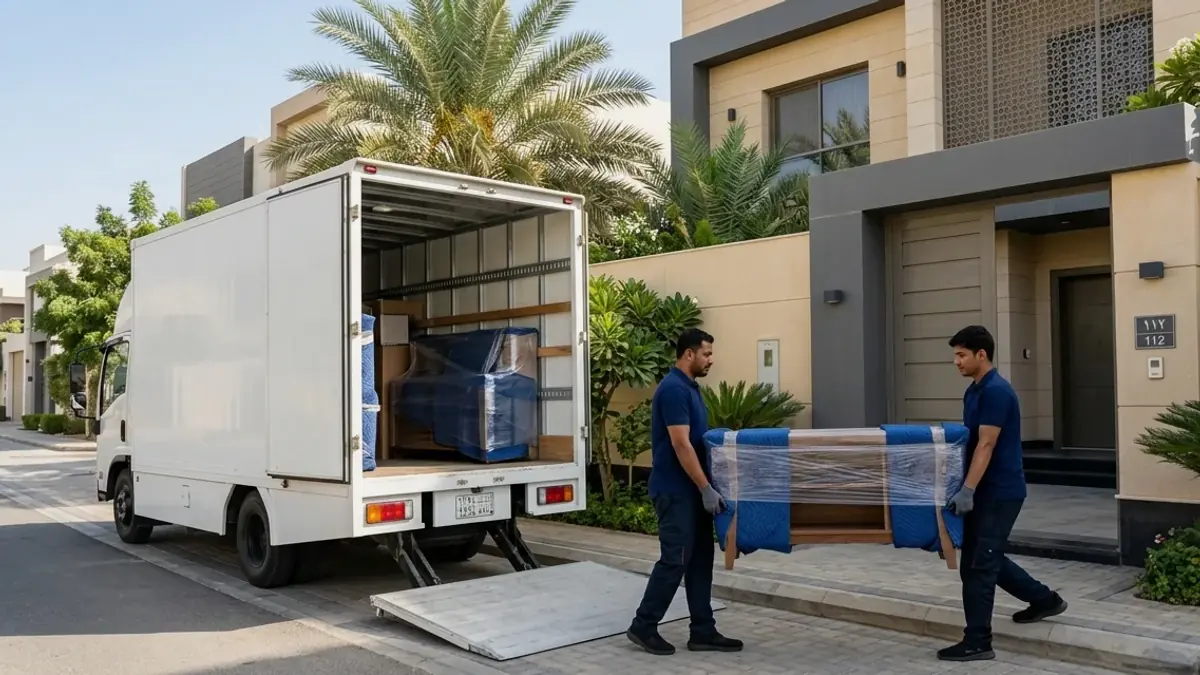
What home furniture packing means in Al Hamdaniyah
Packing is the part of a move that decides whether your belongings arrive intact. Al Hamdaniyah, in north Jeddah, is a residential area of family houses, villas and apartment buildings, and the packing job changes with each: a house has years of accumulated contents in storerooms and annexes, while an apartment usually means fewer rooms but narrower lifts and stairwells that limit box size.
This page covers packing only: how the house is surveyed, which material goes on which item, when to start, and what the written quote should contain.
For the general service see furniture packing in Jeddah, and for the area itself see Al Hamdaniyah. If you are comparing a furniture moving company in Jeddah, this page shows what a proper packing plan looks like.
Packing is not the same as moving
People often ask for "movers" when what they need is someone to wrap everything properly. Packing can happen a day or two before the truck, or on its own if you are moving yourself or putting things into storage. We therefore separate three lines on the written quote: packing, dismantling and reassembly, and transport. You see where the labour goes and can remove any line you will handle yourself.
- This page: survey, materials, wrapping, boxing, numbering, protecting corners and surfaces.
- Other pages: dismantling and assembly and Dyna moving trucks.
Which packing material goes on which item
Using the wrong material is the most common cause of scratches and breakage. This is the rule of thumb we follow:
| Item | Main material | Extra protection | Note |
|---|---|---|---|
| Plates and glasses | Soft packing paper | Dividers in strong cartons | Plates stand on edge, never flat |
| Mirrors and framed art | Paper cover, then bubble wrap | Corner guards, tape in an X on the cover | Always travel upright |
| Glass cabinets | Thick bubble wrap | Moving blankets | Shelves wrapped separately |
| Sofas | Stretch film | Fabric covers on legs | Never wrap damp upholstery |
| Marble tables | Bubble wrap and thick board | Wooden frame or backing board | At least two people lift |
| TVs | Original carton if kept | Foam and board around the screen | Do not lean on the screen |
| Hanging clothes | Wardrobe boxes | None | No folding or pressing |
The survey: we split the house into zones
Before anything is wrapped we walk through the home, or watch a video of it, and split it into zones: kitchen, bedrooms, children's rooms, living room and majlis, study, annex or storeroom, and corridors. For each zone we count large pieces, fragile pieces and the volume of small items. That gives a material estimate before the team arrives.
A four-bedroom house with a full kitchen uses far more cartons than a two-bedroom apartment, and without a survey nobody can price it honestly.
Send photos or a video of each zone to WhatsApp 0566300558 and we reply with a materials plan based on what the camera shows rather than a guess.
Send photos of each room to WhatsApp 0566300558 for a written materials plan.
Numbering and colour coding every box
An unlabelled box becomes a puzzle on delivery day. Every box we pack gets a number, the destination room and a short description. You can add a coloured tape for each room so that the movers at the new home know where the blue box goes without asking.
We also keep a numbered list, on paper or as a photo, so a missing box is spotted at the count and not a week later. Our guide to colour-coding boxes by room explains the system in more detail.
The kitchen: crockery, glass and small appliances
The kitchen takes the most time because it holds the most small fragile items. We start with things you do not use daily and leave everyday crockery for last so you are never without a plate. Plates are wrapped one by one and stacked on their edges, glasses are stuffed with paper inside, and small appliances have their cables bundled and go into their original cartons where they exist.
Open food is best finished, sealed or left behind; an open jar in a hot truck helps nobody. See packing the pantry, spices and dry food for the dry goods.
Clothes, shoes and handbags
Clothes need organisation, not bubble wrap. Hanging clothes go into wardrobe boxes that keep the folds out, folded clothes go into lined cartons by person or room, shoes are packed in pairs without crushing, and leather handbags are stuffed with paper and kept in cloth bags rather than plastic.
Keep a suitcase with the first days of clothing; opening ten boxes to find a school shirt is a poor start to the week. More in packing clothes, shoes and luxury bags.
Mattresses, pillows and bedding
A mattress is large, soft and easily dirtied. We cover it in a proper mattress bag or heavy film plus a fabric layer, and carry it upright because folding damages springs and foam. Pillows and quilts go into large closed bags to keep dust out. If the bed has been dismantled, the screws travel in a bag taped to the bed frame itself and not in a distant box, which saves an hour of searching on the first night.
Screens and electronics
A modern TV panel is thin and sensitive to pressure. If you kept the original carton it is the best protection. If not we build a shell from thick board and bubble wrap and carry the screen upright, protected from friction. Receivers and consoles are photographed from behind before the cables come out so you can reconnect without guessing. Our guide to packing OLED smart TVs is worth a read before packing day.
Mirrors, pictures and frames
Large mirrors are the pieces that most need care. We cover the face with paper, then bubble wrap, then add cardboard corners, and run tape in an X across the cover, not on the glass itself, because tape on glass can leave marks. The mirror is carried on its long edge, leaning against a blanket, away from heavy items. Valuable pictures are wrapped in acid-free paper and marked fragile on two sides. See packing glass cabinets, mirrors and crystal.
Sofas, majlis seating and rugs
Fabric sofas are wrapped in film that keeps dust out, with the legs covered. We do not press film tightly on natural leather because it traps moisture. A traditional majlis with many cushions needs separate large bags for the cushions and numbering of the connected pieces so they return in order. Rugs are rolled, not folded, tied with cotton rope and loaded horizontally near the top.
Beating dust out of rugs before rolling stops the dust turning into stains on delivery.
Wood and marble tables
Wooden tables are wrapped in blankets, with foam on the corners and legs removed where possible. Marble is different: heavy, with edges that chip easily. We use bubble wrap, thick board and a backing panel, and lift with several people. We never put tape on polished marble. For a marble dining table read protecting marble and granite dining tables or see glass and marble moving.
Want full or partial packing? Call 0566300558.
Documents and valuables: what we leave to you
Some items should only be packed by you, even if the crew offers. Keep these with you in a bag or your car:
- Passports, iqama, contracts and property papers.
- Jewellery, cash and valuable watches.
- Medicines and small medical devices.
- Laptops, phones and storage drives.
- Keys to both the old and the new home.
This is a safety rule that protects you and us from any confusion later.
Packing day, step by step
- Meet the team leader and go through the inventory and the written agreement.
- Walk the house together and photograph existing marks on furniture and walls.
- Lay protection on floors and the lift or stairs where needed.
- Pack the least-used rooms first, then the kitchen, then the living areas.
- Number the boxes and record the contents.
- Gather everyday items into one last box.
- Do a closing walk-through with you to check no cupboard or shelf was missed.
In a villa this can take several rooms across a day; an apartment may take half a day. We write the expected time on the quote after seeing the photos.
When to pack before moving day
Packing too early leaves you without your things, and packing too late creates a crush on the final day. This schedule works well:
| Stage | What gets packed | Why |
|---|---|---|
| 5 to 7 days before | Seasonal items, books, decor, storeroom | You do not need them daily |
| 2 to 3 days before | Spare crockery, mirrors, pictures, guest rooms | Lightens the final load |
| The day before | Bedrooms except the beds in use | You still sleep in your own bed |
| Moving day | Remaining kitchen, beds, appliances | Usable until the last moment |
Houses and villas versus apartments in Al Hamdaniyah
Al Hamdaniyah has both detached homes and apartment buildings, and the difference shows up in packing more than in driving. In a house, items accumulate in an annex, a roof room or a storeroom, and there is often outdoor furniture that needs material that survives dust and sun. In an apartment you need smaller boxes that fit a narrow lift and wrapping that limits scraping on walls in tight corridors.
So we do not offer one standard package. For larger homes read villa furniture moving in Al Hamdaniyah, and for the truck size see Dyna trucks in Al Hamdaniyah.
Jeddah heat, humidity and dust: why they change the plan
Jeddah is coastal, humid and hot for much of the year, which changes how packing works. Cardboard softens in humidity, tape can lose grip in heat, and plastic sealed around wood or leather for weeks can trap moisture. We therefore avoid airtight plastic on timber furniture for long periods, use thicker board for anything going into storage, and may add moisture-absorbing packs to boxes of leather goods.
Starting early in the morning or after the afternoon heat is better for everyone, and the timing is agreed in the contract.
Written quote and contract before work: WhatsApp 0566300558.
Bubble wrap or corrugated board: choosing protection
No single material suits everything. Corrugated board gives stiffness and shape, so it suits plates, books and corners; bubble wrap absorbs shocks, so it suits glass and screens; blankets protect polished wood without the cost of disposable material. For a detailed comparison see bubble wrap vs corrugated cardboard, and for how the material choice affects cost see packaging materials cost comparison.
What raises or lowers the packing cost
We do not quote numbers on this page because the right figure comes from seeing your home. The factors are well known:
- Raise it: many fragile pieces, marble and glass, wooden crates, several floors, tight access that slows carrying, and packing a large house in one day.
- Lower it: clearing what you do not need before packing, keeping original appliance cartons, packing clothes yourself, and a flexible date.
The furniture moving cost guide explains the factors, and every line is written on the quote.
Full packing or partial packing
Full packing suits a tight schedule, a house full of fragile items, or people with no time. Partial packing suits those who prefer to pack clothes and books themselves and leave the kitchen, glass, mirrors and furniture to the crew. A sensible split: you pack what is personal and not breakable; we wrap what needs material and technique.
Partial packing reduces both time and cost without putting valuable pieces at risk. For options side by side see move-out packing and protection.
Common mistakes we see
- Putting all the books into one big box that nobody can lift.
- Stacking plates flat on top of each other without paper between them.
- Putting tape directly on glass or polished marble.
- Writing on the top of a box that will be stacked, or in faint pen.
- Wrapping wooden furniture tightly in plastic for weeks.
- Loading heavy items on top of light ones in the same box.
- Leaving bags and documents among boxes that go onto the truck.
- Asking for "packing" without agreeing who supplies materials and who takes away the leftovers.
Checklist before the packing team arrives
- Empty the fridge and freezer 48 hours ahead; see preparing refrigerators and freezers.
- Switch off appliances and photograph cables before unplugging.
- Decide which rooms stay usable until the last day.
- Put valuables and documents in one bag.
- Leave a clear path from the door to the rooms.
- Arrange parking near the entrance.
- Organise access for buildings with a gate or guard.
- Tell neighbours if the lift is shared.
Unpacking without chaos
Good packing ends when the last box is opened. Start with the first-night box (first-night essentials box), then the kitchen so you can eat at home, then the bedrooms. Open each box in the room written on it, check fragile items straight away, and photograph any damage before throwing away the packing material, since those photos support any claim. The crew can collect empty cartons on delivery if you agree this in advance.
What the packing agreement should say
Before wrapping starts, ask for the agreement to state: the rooms covered, who supplies materials and what type, the arrival time and expected duration, what is excluded from packing, how and when damage is reported, and the payment method. We work with a written contract and commercial register 4030592817 and go through each clause with you.
The moving contract checklist gives questions that work with any company, and how to choose a licensed moving company sets out what to look for.
Moving to or from Al Hamdaniyah
Packing is usually one step in a bigger move. If you are moving to Al Fayhaa see Al Hamdaniyah to Al Fayhaa; if you are arriving from Al Nahdah or Al Salhiya see Al Nahdah to Al Hamdaniyah and Al Salhiya to Al Hamdaniyah. For planning the whole move, the four-week moving checklist is a good start.
Looking for movers in Jeddah who handle everything? Al Ostoura Moving combines packing, dismantling, transport and reassembly in one written quote.
Furniture packing in Al Hamdaniyah: common questions
It depends on the number of rooms and fragile items. A small apartment can be packed in half a day, while a large house can need a day or more. We put the estimate on the written quote after seeing photos or a video.
Yes. Packing alone is possible if you will move yourself or put items into storage. The quote lists it as a separate line.
We supply them and list the type and quantity on the quote. If you already have good cartons or covers, we check and use them, which lowers the cost.
Yes. Small appliances and TVs are wrapped appropriately. Fridges need emptying and time to settle, and washing machines are prepared carefully before transport.
We use blankets or fabric covers, and plastic mainly for dust and short periods, because humidity in Jeddah can harm wood if it is sealed in for days.
Damage is recorded and photographed on delivery and dealt with according to the written contract, which is why we go through the damage clause with you before starting.
Valuables and documents must be removed. Clothes can be packed by us in wardrobe boxes or by you, depending on the agreement.
Send photos or a video of each area and the address to WhatsApp 0566300558. We reply with a written quote, then a written contract before the work.
Related pages for packing in Al Hamdaniyah
- Al HamdaniyahDistrict hub with all services
- Villa moving in Al HamdaniyahFor larger homes
- Dyna trucks in Al HamdaniyahAvailable vehicles
- Furniture packingMaterials and methods
- Dismantling and assemblyBeds, wardrobes, kitchens
- Move-out packing and protectionPacking options
- Packaging materials comparisonHow material affects cost
- Moving cost guidePrice factors
- Contract checklistBefore signing
- Colour-coding boxesPractical guide
- Moving cost in Al Hamdaniyah
Send photos or a video of each area with the address to WhatsApp 0566300558. You will receive a written quote that itemises materials and labour, then a written contract before packing day.