Furniture Packing Service in Al Murjan, Jeddah, Planned for Sea Air and Big Homes
We pack homes in Al Murjan, north Jeddah, with a layer plan chosen item by item, so leather, wood, glass and electronics survive humid coastal air as well as the bumps of moving day. Send a short WhatsApp video, get a written quote and contract, and we take it from there.
Layered packing · Materials matched to each item · Disassembly when needed · Written contract · CR 4030592817
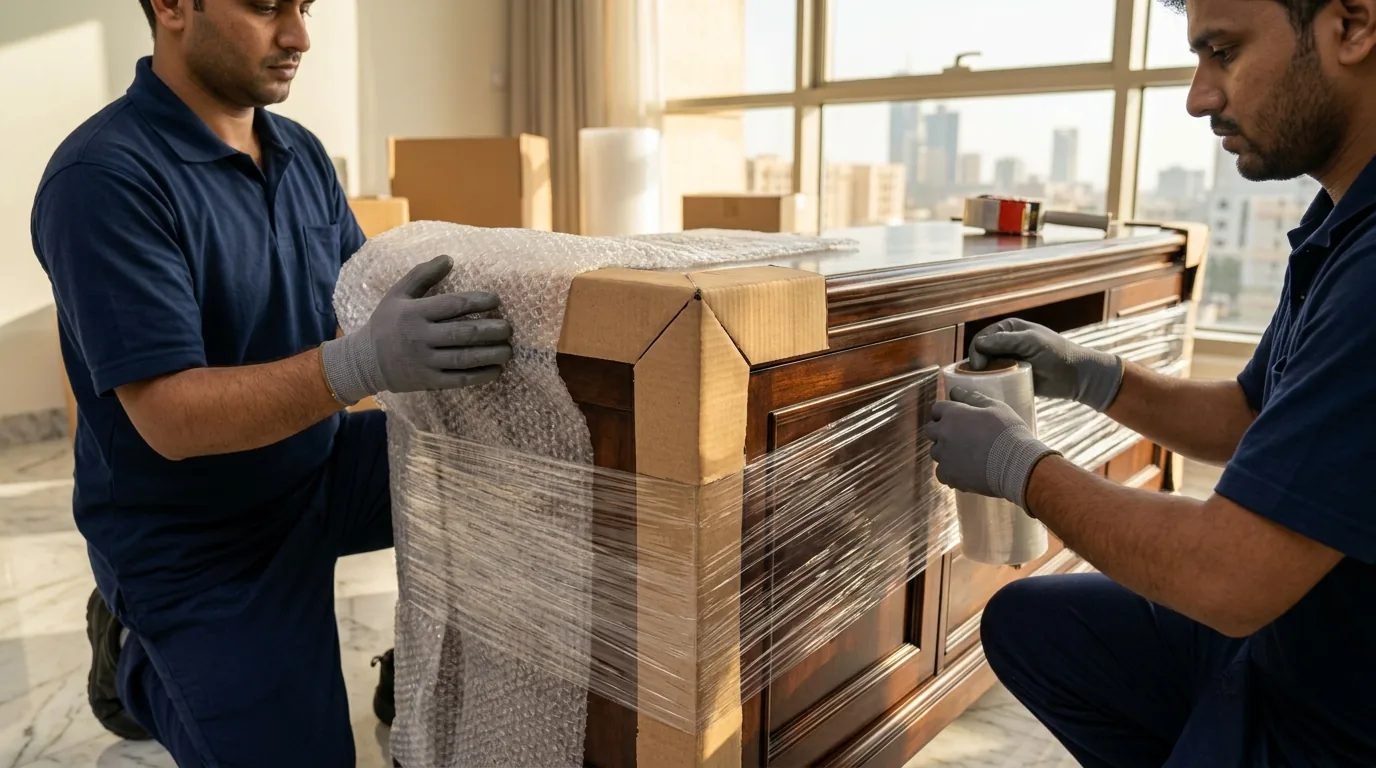
Why packing in Al Murjan is not the same as packing inland
Al Murjan sits in north Jeddah close to the Obhur area and the Red Sea, so the air carries moisture and a little salt most of the year. That does not matter much while your furniture stands in an air-conditioned living room, but it matters a lot once pieces are sealed in plastic, loaded into a truck in the afternoon heat and left wrapped for a day or two.
Trapped moisture is what spoils polished wood, leaves a musty smell in fabric and makes leather sweat. So instead of stretch-wrapping everything tight, we build a breathable inner layer first, add shock protection, and only then close the outer wrap. The order of the layers is what keeps things looking the way they did.
Large homes, more pieces, more planning
Much of Al Murjan is villas, duplexes and spacious family homes, with newer apartment buildings in parts of the district. A bigger home usually means several majlis areas, heavy master bedroom sets, chandeliers, tall mirrors and often an outdoor seating area. Every one of those adds boxes, blankets and corner guards compared with a typical two-bedroom flat.
That is why we ask for a walk-through video before quoting rather than guessing from the number of bedrooms. If you are moving between villas, our page on villa moves within Al Murjan explains how packing and loading are scheduled together so the truck is not kept waiting.
Our three-layer method for humid coastal air
Layer one touches the surface: clean packing paper, a soft cloth cover or thin foam. It stops scratches and keeps plastic from sticking directly to lacquered wood or leather, and it lets the surface breathe. Layer two absorbs knocks: bubble wrap, thick moving blankets or cardboard corners, depending on the piece.
Layer three is the outer shell, usually stretch film or heavy corrugated board, which holds everything together and keeps dust out. On fabric and leather we leave the film loose or vented rather than airtight. For a deeper look at how many bubble layers fragile items really need, see our bubble wrap layering guide for fragile pieces.
Materials plan: what each item gets and why
The table below shows our usual approach for common household items. There are no prices here, because quantities depend on size and condition, but it tells you exactly what will go on each piece.
| Item | Inner layer | Impact layer | Outer layer | Coastal note |
|---|---|---|---|---|
| Fabric sofa | Cloth cover | Moving blanket | Light stretch film | Never sealed airtight for long |
| Leather sofa | Soft paper | Blanket | Vented film | No plastic touching the leather |
| Wooden dining table | Thin foam | Corner guards and blanket | Board over the top | Legs removed to cut pressure points |
| Marble or glass top | Foam | Double bubble wrap | Board frame or crate | Carried on edge, never flat |
| Dresser with mirror | Soft paper | Bubble wrap | Board on mirror | Mirror detached from body |
| Appliances | Fully dried first | Blanket | Stretch film | Never wrapped while damp |
| Crystal chandelier | Paper per crystal | Bubble wrap | Divided box | Parts numbered before removal |
| Mattress | Mattress cover | - | Heavy bag | Bagged only when dry |
Send a WhatsApp video so we can plan the right layers for each piece
Condensation: the quiet damage most people miss
In a seaside district the real risk is rarely a knock. It is condensation. A cold wooden cabinet taken straight from an air-conditioned room, sealed tight in plastic and then loaded into a hot truck will often fog up under the wrap. Leave it like that overnight and you may find water marks on the finish or a damp smell in the drawers.
We reduce this by letting pieces settle to room temperature before the final wrap where time allows, by keeping film loose on soft furnishings, and by unwrapping promptly at the destination. A small step on your side helps too: switching the AC off in the room being packed about an hour before we arrive.
Metal, hardware and outdoor furniture
Wrought-iron garden chairs, brass handles, metal table bases and gilded frames do not like salty air, especially if they are wrapped while dusty or damp. We wipe them down, wrap metal separately from wood so nothing transfers between them, and bag small fittings in labeled pouches taped to the piece they belong to.
Many Al Murjan homes also have rattan or aluminium terrace sets with cushions. Cushions soak up moisture, so they travel in dry fabric bags or boxes, while frames get blankets against scratches. Umbrellas, grills and big planters should be clean and dry before packing day, and we note them during the video so they do not surprise anyone.
Sectionals, majlis seating and big sofas
Family homes here often have large corner sofas made of several modules, or floor majlis seating with cushions and armrests. We separate the modules, number them in the order they sit in the room and wrap each one on its own. That makes carrying safer and setting up in the new home much faster.
Protruding corners and wooden feet get extra corner guards because they are the first thing to meet a door frame. If a module is wider than the door or the staircase turn, we decide on disassembly or a hoist before wrapping, not after a fully wrapped piece is stuck halfway down the stairs.
Master bedrooms and tall wardrobes
Our rule is simple: wardrobes are emptied and taken apart before they are wrapped. Moving a fully assembled wardrobe strains the hinges, and carrying it down a villa staircase is risky for both the furniture and the walls. Panels are wrapped flat with cardboard sheets between them, and mirrored doors travel separately, standing upright.
Upholstered headboards get a cloth cover and a loose outer film so moisture is not trapped. Bed frames are labeled by side and position, and every screw goes into a bag marked with the room name. When we reassemble, nothing is guessed.
Kitchen, glassware and serving sets
The kitchen always eats the most boxes, and homes that entertain often have extra serving sets and fine china. Each glass or ceramic piece is wrapped individually, plates go in on their edges rather than stacked flat, and gaps are filled with crumpled paper so nothing shifts inside the box.
Heavy items go into smaller boxes so no carton becomes too heavy to lift safely. Fragile boxes are marked clearly with an arrow showing which way is up. Dry food is sealed in bags, and liquids travel in their own box away from linens and clothes.
Your pre-packing checklist
A few things on your side save hours on the day and reduce the chance of mistakes:
- Set aside items you will not move, or donate them before we arrive.
- Take jewellery, passports, documents and cash with you personally.
- Defrost and dry the fridge and washing machine 24 to 48 hours ahead if possible.
- Pick one room near the entrance where finished boxes can be stacked.
- Tell the building guard or management the date if you live in an apartment block.
- Photograph the back of TVs and AV systems before unplugging anything.
- Point out heirlooms or pieces that need extra care.
- Switch off the AC in rooms with leather and wood about an hour before packing.
How the job runs, step by step
Every packing job follows the same sequence, so you always know what comes next:
In humid conditions the last step matters most. Leather, fabric and mattresses should come out of their wrap soon after arrival rather than sit sealed in a new home for days.
Packing only, or packing plus the move?
Some residents only need packing: they are repainting, renovating, or handling the transport themselves. In that case we focus on dust and paint protection and leave more ventilation, because the furniture may stay wrapped for weeks rather than hours.
When packing is part of a move, it works best if the same crew packs and loads, because they know where each piece is weak and how it was layered. For larger loads we can bring a closed dyna truck for Al Murjan moves on the same day, so wrapped items go straight onto the truck.
Book your Al Murjan packing date after receiving a written quote
What shapes the cost of packing your home
We do not publish a fixed price for packing a home because two houses with the same number of bedrooms can be very different jobs. The main factors are the number and size of pieces, the share of fragile items such as glass, marble and crystal, how many pieces need disassembly first, the grade of materials, and whether you want unpacking and placement at the other end.
Material choice alone makes a difference: double-wall cartons, reusable blankets and stretch film each have a role. If you want to see where it is worth spending and where it is not, read our comparison of packing material costs.
Getting an accurate quote
The quickest route is a continuous video that walks through every room, pausing on large furniture, glass, chandeliers and electronics. Tell us the district, the type of home, the floor and whether there is a lift, and whether you need packing only or the full move with assembly. That is usually enough for a clear written offer.
Once agreed, the scope, materials and date go into a written contract before work starts. That is how Al Ostoura, as a team of movers in Jeddah, works on every job, under commercial registration 4030592817.
Scenarios by home type
Two-storey standalone villa
We usually work from the top floor down so hallways stay clear, and measure the inner staircase before wrapping the largest pieces. A big villa with chandeliers and several majlis rooms often takes a full day or more.
Duplex or large flat in a building
Here the focus is on booking the lift, protecting its walls and wrapping everything inside the flat before it reaches the corridor. Annexes and rest houses mainly involve outdoor seating, appliances and bedding.
Chandeliers, curtains and statement mirrors
Crystal chandeliers in villa halls are among the most time-consuming pieces. We photograph the fitting before taking it down, number the arms, and wrap each crystal on its own before placing it in a divided box. It takes patience, but it saves a lot of frustration when it goes back up.
Heavy curtains are folded on their rods or removed and bagged in clean fabric covers. Large mirrors get a cardboard frame and travel upright. Because these items involve taking down and refitting, they appear as a separate line in the contract.
How Al Murjan compares with other districts
The core method is the same across Jeddah, but the details change. In apartment-heavy inland districts, like those described on our Al Safa home packing page, the challenge is usually tight lifts, stairs and corridors rather than the size of the home.
In Al Murjan the work is shaped by large houses, many oversized pieces and the coastal air. In newer north-east districts it changes again; our packing service in Al Asalah deals mostly with families moving into freshly built apartments.
DIY packing mistakes we see often
The most common one is stretch-wrapping everything directly, which traps humidity and can leave a sticky film on some finishes. Next comes using flimsy grocery boxes for heavy kitchenware, which collapse when stacked. Then there are unlabeled boxes, which turn unpacking into a long treasure hunt.
Another mistake is wrapping furniture days in advance and leaving it in a hot room. If you want to do part of the work yourself, start with books, clothes and linens, and leave the fragile and oversized items to the crew.
Unwrapping, checking and clearing up
Arrival is not the end of the job. We unwrap in a sensible order: leather, fabric and mattresses first so they can breathe, then wood, then boxes according to the rooms you want ready first. Boxes are labeled by room and number so they go straight to the right place.
We ask you to check the main pieces as they are unwrapped and tick boxes off against the list. Reusable blankets leave with the crew, and cardboard and film are gathered in one spot.
Related services and why residents choose us
This page is specific to Al Murjan. For the full service, including box types, blankets and specialty items, see our furniture packing service in Jeddah. For everything else we do in the district, visit our Al Murjan neighborhood page.
We work inside Jeddah only, quote from real photos and video, and sign a written contract before we start. We also tell you plainly when a piece needs a carpenter, a hoist or disassembly first. Call 0566300558 or message us on WhatsApp to begin.
Ask about chandeliers, mirrors and electronics before moving day
Furniture packing in Al Murjan: common questions
Yes. Humidity and salt in the air mean we add a breathable inner layer before any plastic and avoid sealing leather or fabric airtight. We also unwrap quickly at the destination to prevent condensation.
Yes. Packing only is common during renovations or when you are handling transport yourself. We leave extra ventilation because pieces may stay wrapped longer.
It depends on the number of rooms, fragile items and fittings like chandeliers. Large villas often need a full day or more, and we give a clearer estimate after seeing your video.
In most cases, yes. Panels are wrapped flat, mirrored doors travel upright, and every screw goes into a labeled bag.
From your photos or video, based on the number and size of items, materials needed, fragile share and any disassembly. The price and scope are written into the contract before we start.
Passports, documents, jewellery, cash, daily medication and the keys to your new home. These should travel with you, not in the boxes.
Yes. Cushions go in dry bags, while metal or rattan frames get blankets. Everything should be clean and dry before packing to avoid odours.
More on packing and moving in north Jeddah
- Furniture packing in JeddahFull packing service and materials
- Villa moves in Al MurjanCoordinating villa-to-villa moves
- Dyna trucks from Al MurjanClosed trucks for bigger loads
- Home packing in Al SafaPacking for apartment buildings
- Home packing in Al AsalahMoves into new-build flats
- Packing material cost comparisonWhere materials are worth it
- Bubble wrap layering guideHow many layers fragile items need
Ready to have your Al Murjan home packed properly? Send a quick video on WhatsApp and get a written quote.